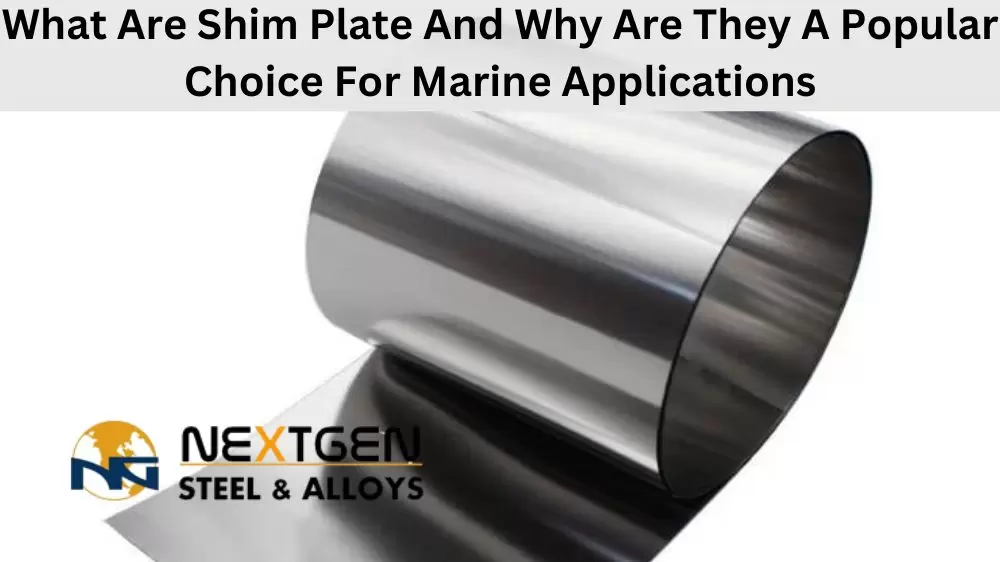
Regarding superior protection in even the most challenging marine conditions, shim plates are an increasingly popular choice. These lightweight stainless steel components offer excellent strength and corrosion protection, making them a dependable option for any water-based environment. But what is a shim plate exactly? And why does it stand out from other items on the market? Read on to learn more about this versatile solution and how it can help optimize marine applications across different industries.
What are Shim Plates?
Shim Plates are thin metal plates used for precision shimming, a process of adjusting the gap between two surfaces. Shims are generally made from steel, zinc-plated steel or stainless steel, and they come with a range of thicknesses to precisely adjust the gap between two mating surfaces. Shim plates can be cut into shapes like circles, rectangles and squares to fit into any space. They help achieve faster and more accurate fitting while increasing the durability and strength of bolted connections. Shim plates are especially necessary when there isn’t enough clearance for washers or bolts that require snug fits or precise spacing.
Why are Shim Plates Used in Marine Applications?
Shim plates are used in marine applications to accurately adjust and align the faces of mechanical components, such as engine blocks and other parts. Shims provide an extra layer of protection against wear and tear by cushioning vibrations, allowing for a tight fit between the two components. They also enable fine adjustments to be made quickly and cost-effectively without removing or replacing large components. Furthermore, shim plates can improve the performance of engines on offshore vessels by removing abruptness from high power surges that strain the engine’s driveshafts and other moving parts. This helps extend its lifespan significantly and allows vessels to operate reliably across long distances over extended periods.
The Different Types of Shim Plates
A shim plate is an engineered metal product that precisely controls thicknesses or gaps between mating components. It provides precision accuracy and controlled tolerances for various aerospace, automotive, construction and engineering applications. Shim plates come in different types: perforated, slotted, stepped shims and flat blank. Perforated shims are made from metal sheets with multiple openings cut according to the desired size and shape. Slotted shims are similar but have a rectangular lengthwise slot instead of small holes; they can offer increased adjustment range compared to perforated options when positioning parts at right angles or in other configurations where close tolerance alignment is important. Stepped shims provide two-dimensional adjustment capabilities due to their “stair-step” design which allows for fine-tuning by applying pressure on various edges. At the same time, the flat blank option offers the most efficient use of materials since it can be custom punched into whatever shape is needed without wasting material around the edges.
Other Applications of Shim Plates
Shim plates are not limited to marine applications. They are also used in the aerospace, automotive, manufacturing, and construction industries. They are commonly used to align and adjust parts in machinery and vehicles.
Tips for Choosing the Right Shim Plates
When choosing shim plates for your marine application, there are important factors to consider. These include the type of material, thickness, and size of the shim plate. Selecting the right shim plate for your specific application is crucial to ensure it is effective and long-lasting.
Conclusion:
In conclusion, shim plates are crucial components that provide a simple and effective solution for adjusting the alignment and spacing between two surfaces. They are corrosion-resistant, durable, and available in various thicknesses and types to suit different applications. Whether you’re a boat owner, marine professional, or involved in other sectors that use machinery, investing in high-quality shim plates can help prolong the lifespan of your equipment and components. By using shim plates, you can ensure your vessel is operating smoothly and efficiently.