
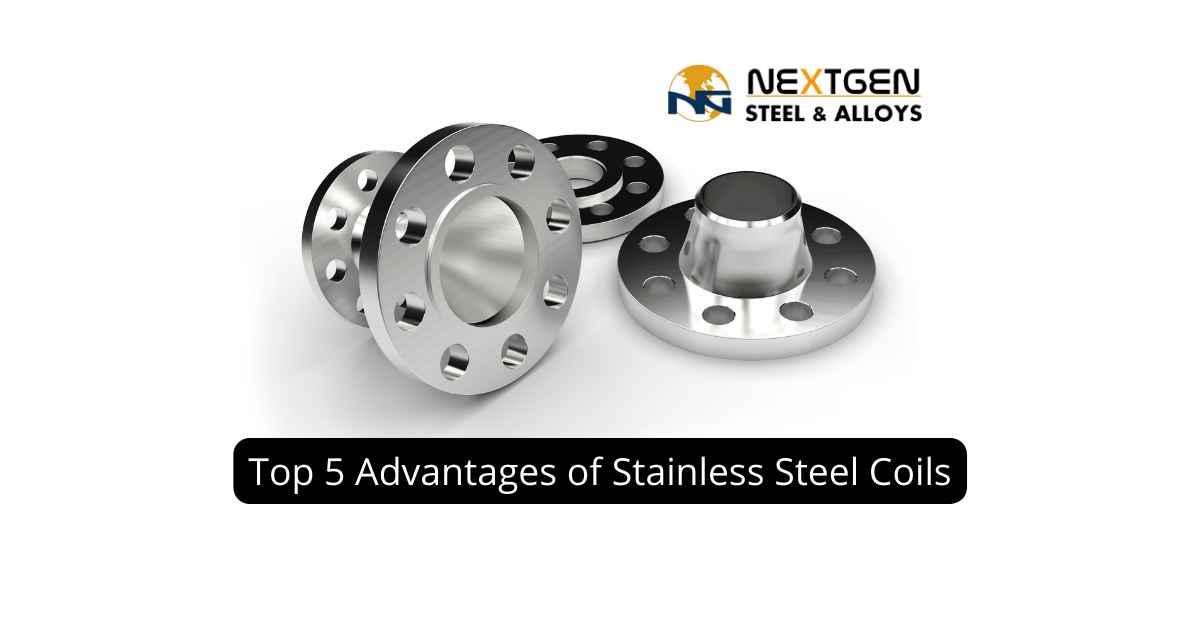
Flanges connect pipes, valves, and other industrial equipment. They simplify cleaning, maintenance, and inspections. In heavy industries, flanges must be carefully chosen because they can become a weak spot in the system.
Why Choose Steel Flanges Made of Stainless Steel?
You want to get the most bang for your buck. Here are some reasons why stainless steel flanges are a good investment.
Corrosion Resistance
Corrosion is a significant factor in any metal use. Metals are affected by rust, pollutants, and other environmental factors. As a result, choosing flanges that can withstand these circumstances is preferred. Stainless steel is a good choice due to its high corrosion resistance.
Durability
Stainless steel is a hard metal that can withstand a lot of wear and tear. Aluminium is a less expensive alternative, but it cannot withstand the same amount of tension.
Resistance to High-Temperature
In some businesses, temperatures can reach dangerously high levels. Flange fittings made of stainless steel, on the other hand, can withstand high temperatures without deforming or warping. As a result, you may rest assured that your system will never be compromised.
Types of Stainless Steel Flanges
Here are some of the stainless-steel flange fittings you might encounter on the market, as well as some information about them.
Slip-on Flanges
Consider SS Slip on flanges if you are on a budget. They’re the cheapest, yet they still get the job done. It needs to be somewhat larger than the pipe to allow it to slip over it. These flanges are also fillet welded in place and can’t tolerate tremendous pressure.
Flanges with a Weld Neck
Their prominent necks are a distinguishing trait. Long weld neck flanges have the same thickness as the pipe and are suited for high-pressure duty.
Flanges with Threads
They are exclusively utilized for specific purposes. A threaded flange, for example, can be swiftly assembled without welding. They are compatible with pipes that contain external threads, as the name implies. Threaded flanges, unlike weld neck flanges, are not suitable for applications involving high pressure, high temperature, or bending forces.
Flanges for Lap Joints
They are similar to slip-on flanges, but they’re for stub-end fittings. They are ideal for systems that need to be inspected and maintained regularly.
Flanges with a Socket Weld
They are extremely robust and are perfect for pipelines with small diameters and high pressures. Internal welds increase the durability and fatigue strength of the product. Chemical processing is where they’re most commonly used.
Flanges for Ring-Type Joints
High pressure and high heat are no match for these flanges. On bind, slip-on, or weld neck flanges, they have a groove that can be readily squeezed. They aid in the prevention of leaks in high-pressure pipelines.
Flanges for Orifices
These flanges enable access to a liquid or gas metering line. They are used in conjunction with orifice plates and flow nozzles.
Flanges for Blind Pipes
Blind flanges are used to seal pipe systems or vessels and do not have a bore. Due to internal pressure, a blind flange must resist a lot of force. They are useful for systems that need to be inspected frequently.


